
Cybersecurity threats are not limited to large corporations. Small businesses also face phishing emails, ransomware, unauthorized account access, and data breaches that can disrupt operations and compromise sensitive information.
For business owners in Marquette, Michigan, and throughout the Upper Peninsula, knowing when to hire a cybersecurity consultant can help prevent costly security problems.
Whether you operate a medical practice, retail store, professional office, or manufacturing business, understanding your cybersecurity risks is an important part of protecting your company.
This guide explains when small businesses should seek cybersecurity consulting, what a security assessment includes, how consulting differs from managed IT, and why working with a local expert can be beneficial.
When Should a Small Business Hire a Cybersecurity Consultant?
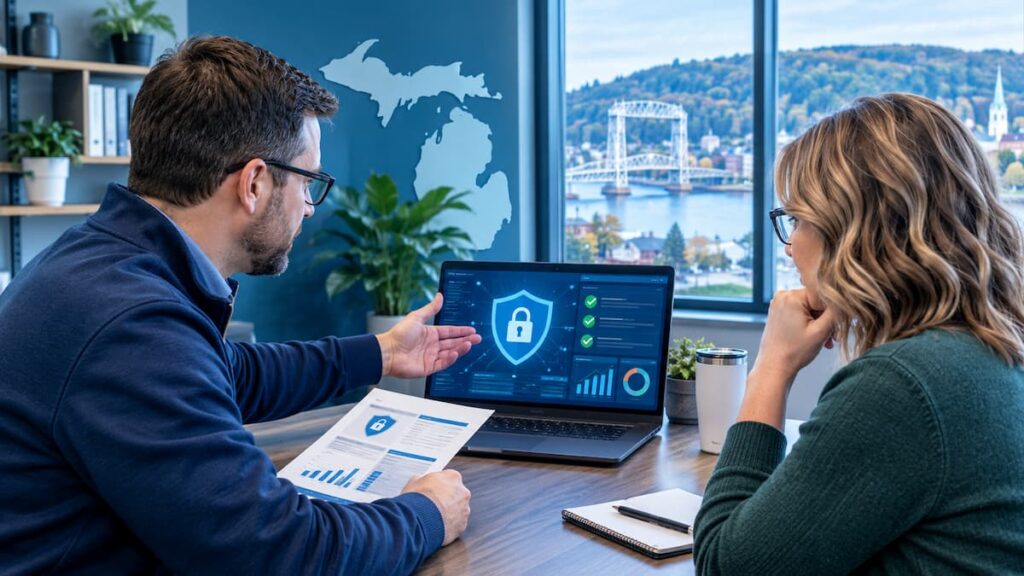
A small business should consider hiring a cybersecurity consultant when it handles sensitive customer information, experiences suspicious activity, lacks a documented security plan, expands its technology systems, or must meet cybersecurity requirements from clients or insurers.
A cybersecurity consultant evaluates existing protections, identifies vulnerabilities, recommends improvements, and develops a practical security plan based on the company’s risks and budget.
For small businesses in Marquette, MI, and Michigan’s Upper Peninsula, working with a local cybersecurity expert may also provide access to on-site assessments, personalized IT recommendations, and ongoing technical support.
Key takeaways:
- When to hire: Before a security incident, during business growth, or when new compliance or contractual requirements arise.
- What consultants do: Assess cybersecurity risks, review existing protections, and recommend prioritized improvements.
- Who needs consulting: Businesses handling customer data, financial records, confidential information, or critical technology systems.
- What affects cost: Business size, number of devices, complexity, and assessment scope.
- Why choose local: Convenient on-site assistance, regional familiarity, and a long-term technology relationship.
What Is Small Business Cybersecurity Consulting?
Small business cybersecurity consulting is a professional service that helps organizations identify, evaluate, and reduce risks to their digital systems, networks, accounts, and business information.
Unlike basic troubleshooting, cybersecurity consulting focuses on preventing security incidents and developing a structured approach to managing technology risks.
A typical cybersecurity consulting engagement may include:
- Cybersecurity risk assessments and vulnerability reviews.
- Network and endpoint security evaluations.
- Email security and phishing protection reviews.
- Multi-factor authentication (MFA) and access-control assessments.
- Data backup and recovery planning.
- Employee cybersecurity awareness recommendations.
- Security policies and incident response planning.
- Prioritized recommendations for improving cybersecurity.
The NIST Cybersecurity Framework 2.0 Small Business Quick-Start Guide provides a recognized approach to managing cybersecurity risks, particularly for organizations with limited security resources.
A consultant can use established security principles to help business owners understand which improvements deserve attention first.
7 Signs Your Small Business Needs Cybersecurity Consulting
1. Your Business Has Never Had a Cybersecurity Assessment
If your business has never completed a professional security review, you may not know where its most significant vulnerabilities exist.
Outdated software, weak passwords, improperly configured networks, and excessive account permissions can create unnecessary exposure.
A cybersecurity assessment for small businesses establishes a baseline of existing security controls and identifies opportunities for improvement.
2. Employees Receive Suspicious Emails or Phishing Attempts
Phishing emails often imitate trusted organizations, vendors, or employees to trick recipients into revealing information or making unauthorized payments.
Warning signs include unexpected payment requests, unfamiliar login notifications, and emails requesting urgent account verification.
A cybersecurity consultant can evaluate email security settings, authentication protections, and employee awareness practices to help reduce these risks.
3. Your Business Handles Sensitive Customer Information
Businesses that collect financial information, medical records, confidential documents, or customer account details have additional responsibilities for protecting that information.
Depending on the industry and applicable requirements, cybersecurity consulting may help identify security gaps and support compliance planning.
For example, healthcare providers, financial organizations, and professional service firms may need more detailed security assessments than businesses with limited sensitive data.
A consultant should clarify which requirements apply and when specialized legal or compliance advice is necessary.
4. Your Company Is Growing or Adding New Technology
Business expansion often introduces new devices, software platforms, employees, and network connections.
Without a coordinated security strategy, these changes can create inconsistent access permissions and overlooked vulnerabilities.
Cybersecurity consulting can help businesses evaluate risks before opening additional locations, implementing cloud systems, or supporting remote employees.
5. You Rely on Shared Passwords or Unmanaged Devices
Shared accounts make it difficult to determine who accessed important information or changed business settings.
Similarly, employee-owned devices may lack consistent updates, encryption, or access controls.
A cybersecurity consultant can recommend individual accounts, stronger authentication, appropriate device policies, and role-based access controls.
6. A Client or Insurance Provider Requests Security Documentation
Some business customers and cyber insurance providers request information about data protection, backup procedures, multi-factor authentication, and incident response plans.
A cybersecurity assessment can help document existing protections and identify gaps before responding to these requirements.
Consulting does not automatically establish compliance or guarantee insurance eligibility, but it can support a more organized approach to meeting documented obligations.
7. Your Business Has Experienced a Security Incident
Suspicious logins, lost devices, malware infections, and unexpected account changes deserve prompt investigation.
If an incident is actively occurring, prioritize containment, evidence preservation, and qualified incident response assistance rather than waiting for a routine consulting appointment.
After the immediate situation is addressed, a cybersecurity consultant can help identify underlying weaknesses and recommend improvements to reduce the likelihood of recurrence.
Cybersecurity Consulting vs. Managed IT vs. Managed Security
Small business owners often confuse cybersecurity consulting with managed IT services. Although these services can complement one another, they serve different purposes.
| Service | Primary purpose | Typical activities |
|---|---|---|
| Cybersecurity consulting | Identify risks and plan improvements | Assessments, security policies, recommendations |
| Managed IT services | Maintain business technology | Help desk, device management, updates, backups |
| Managed security services | Monitor and respond to threats | Security alerts, threat detection, response support |
The main difference: Cybersecurity consulting identifies what needs improvement, managed IT maintains day-to-day technology, and managed security focuses on ongoing threat monitoring and response.
Businesses that need continuous technology assistance can also explore IT and Managed Services in Marquette County through Superior Eagle.
A coordinated approach helps businesses address both everyday technical problems and longer-term cybersecurity risks.
What Does a Small Business Cybersecurity Assessment Include?
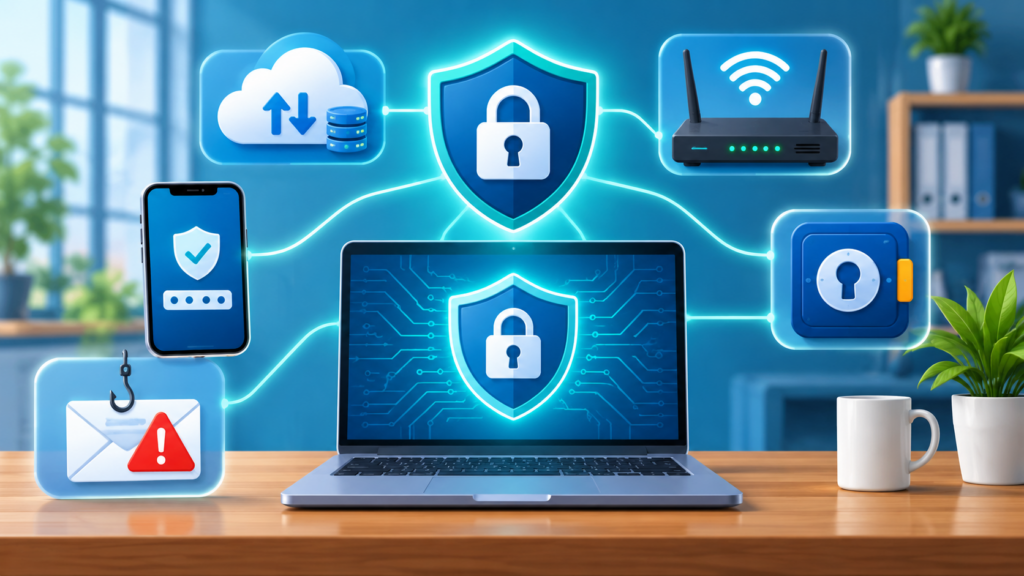
A cybersecurity assessment examines how well an organization’s existing technology and security practices protect its operations and information.
The exact scope depends on the business, but a typical assessment follows five stages.
Step 1: Business and Technology Discovery
The consultant identifies important systems, devices, cloud applications, data, and business processes.
This helps establish which technology assets are essential to daily operations.
Step 2: Security Controls Review
Existing safeguards are evaluated, including password policies, MFA, software updates, device protections, network configurations, and backup procedures.
Step 3: Risk Identification
The consultant identifies vulnerabilities, misconfigurations, and procedural weaknesses that could expose business information or disrupt operations.
Step 4: Written Findings and Recommendations
The business receives a report explaining identified risks and recommended improvements.
An actionable report should prioritize findings by potential business impact and urgency.
Step 5: Implementation Planning
The consultant helps establish a practical improvement roadmap.
Depending on the engagement, implementation may be handled by the consultant, the business’s existing IT provider, or another qualified specialist.
What should a business receive after an assessment?
At minimum, request a clear explanation of the assessment scope, documented findings, prioritized recommendations, and next steps.
Why Hire a Local Cybersecurity Consultant in Marquette, MI?
For businesses in Marquette and Michigan’s Upper Peninsula, local cybersecurity consulting can offer practical advantages when compared with relying exclusively on remote providers.
On-Site Technology Assessments
Some cybersecurity issues are easier to evaluate when a technician can physically inspect network equipment, devices, and infrastructure.
Local availability can be particularly useful for organizations with multiple workstations, specialized equipment, or complex office networks.
Understanding Regional Business Technology Needs
Small businesses in Marquette County operate across industries including healthcare, hospitality, manufacturing, retail, and professional services.
Each business may have different technology dependencies, budgets, and security priorities.
A provider familiar with these operating environments can help develop recommendations suited to smaller organizations.
Coordinated IT and Security Support
Cybersecurity is connected to network infrastructure, backups, communications systems, and physical security.
For example, poorly configured network-connected cameras or outdated network equipment may introduce avoidable security risks.
Businesses planning to improve both digital and physical protection can explore Access Control and Security Camera Services as part of a broader technology strategy.
Long-Term Technology Planning
A local provider may be able to maintain an ongoing relationship as the business expands, upgrades equipment, or adopts new software.
However, location alone does not guarantee expertise. Businesses should also evaluate qualifications, assessment methods, service agreements, response capabilities, and references.
How Much Does Small Business Cybersecurity Consulting Cost?
Small business cybersecurity consulting costs depend on the number of devices, complexity of the network, sensitivity of business data, assessment depth, and services included.
There is no universal price that accurately represents every small business engagement.
Common pricing structures include:
- Fixed-fee assessments: A defined price for an agreed scope of work.
- Hourly consulting: Billing based on the time required for advisory or technical services.
- Project-based consulting: Pricing for a specific security improvement or implementation project.
- Ongoing service agreements: Recurring support, monitoring, or security management, depending on the contract.
When comparing proposals, ask whether the price includes vulnerability testing, a written report, remediation planning, and follow-up support.
A less expensive assessment may not be the better value if important systems are excluded or recommendations are too vague to implement.
Small Business Cybersecurity Checklist: What Should You Protect First?
Before investing in complex security tools, businesses should establish fundamental cybersecurity protections.
Use this checklist to review your current security posture:
- Enable multi-factor authentication for important accounts.
- Use unique passwords and a secure password manager.
- Keep operating systems, applications, and network equipment updated.
- Maintain reliable backups and test recovery procedures.
- Restrict employee access to information required for their roles.
- Train employees to recognize phishing and suspicious requests.
- Secure business Wi-Fi and network-connected equipment.
- Maintain an inventory of devices and important software.
- Establish a documented incident response procedure.
- Review security controls regularly and after major technology changes.
The Cybersecurity and Infrastructure Security Agency (CISA) also provides practical guidance on strong passwords, multi-factor authentication, phishing awareness, and software updates.
These measures are valuable starting points, but they do not replace a risk assessment tailored to your business.
How to Choose the Right Cybersecurity Consultant
Before hiring a cybersecurity consultant in Marquette, MI, or elsewhere in the Upper Peninsula, ask questions that reveal the provider’s experience and assessment process.
- What does your cybersecurity assessment include?
Confirm whether the assessment covers networks, endpoints, email, cloud services, identity management, and backup systems.
- Will we receive a written cybersecurity report?
Request clear findings, risk priorities, and recommended actions.
- Do you work with businesses of our size?
A small company may need a different approach from an organization with a dedicated IT department.
- Can you help implement the recommendations?
Some consultants provide advisory services only, while others also offer technical implementation and ongoing support.
- What happens if we experience a cybersecurity incident?
Ask about emergency response procedures, availability, and whether incident response services are included or provided separately.
- How do you prioritize improvements within our budget?
A good consulting engagement should distinguish urgent security needs from lower-priority projects.
For businesses seeking broader technical guidance, Superior Eagle also provides Professional Services focused on practical technology solutions.
Frequently Asked Questions About Small Business Cybersecurity Consulting
1. Does a small business really need a cybersecurity consultant?
A small business should consider cybersecurity consulting if it handles sensitive information, depends heavily on technology, lacks a security plan, or needs to meet contractual security requirements. Even businesses with only a few employees can benefit from an assessment that identifies vulnerabilities and prioritizes affordable improvements.
2. What is the difference between a cybersecurity consultant and an IT support provider?
A cybersecurity consultant focuses on identifying security risks, evaluating controls, and recommending improvements. An IT support provider generally manages devices, software, networks, and everyday technical problems. Some providers offer both services, allowing businesses to coordinate security planning and ongoing IT maintenance.
3. How much does a cybersecurity assessment cost for a small business?
The cost depends on the number of devices, network complexity, assessment scope, and reporting requirements. A basic review and a comprehensive security assessment may have significantly different prices. Request a written proposal that explains the deliverables and identifies any additional implementation or monitoring fees.
4. How often should a small business conduct a cybersecurity assessment?
Assessment frequency should reflect business risks, contractual obligations, and technology changes. Businesses should review security after significant events such as system migrations, major staffing changes, new locations, or security incidents. A qualified consultant can help determine an appropriate ongoing review schedule.
5. Why choose a local cybersecurity consultant near Marquette, Michigan?
A local cybersecurity consultant may offer easier access to on-site assessments, familiarity with regional business environments, and ongoing technical assistance. Businesses should compare local providers based on expertise, responsiveness, service scope, and experience rather than geography alone.
Protect Your Small Business With a Practical Cybersecurity Strategy
Cybersecurity consulting helps small businesses understand their technology risks before those risks become costly operational problems.
Whether your business needs its first cybersecurity assessment, stronger account protections, better backup planning, or a coordinated IT strategy, the right starting point is understanding what needs attention.
Superior Eagle provides technology and IT services for businesses in Marquette, Michigan, and surrounding Upper Peninsula communities.
If you are unsure where your business stands, contact Superior Eagle to discuss your technology environment, security concerns, and available assessment or support options.
Take the first step toward stronger business security. Contact Superior Eagle to discuss your IT and cybersecurity needs.